
Cordless Angle Grinder Guide: 20V Brushless Models, Specs and Manufacturer Selection
Cordless Angle Grinder Guide: 20V Brushless Models, Specs and Manufacturer Selection
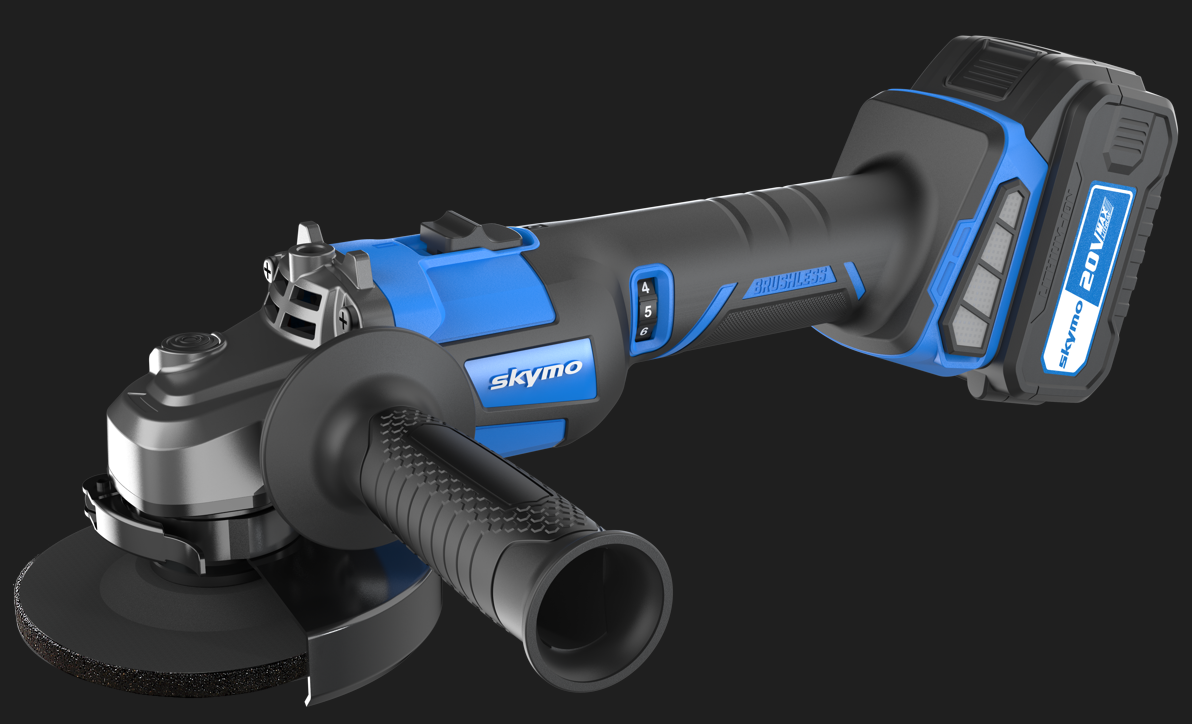
A cordless angle grinder is a battery-powered power tool that spins an abrasive wheel to cut, grind and polish metal, stone, concrete and similar hard materials. Removing the cable is the whole point for maintenance technicians, fabricators and installers who work away from an outlet — but it also introduces decisions a corded tool never asks: which battery platform, which motor type, which wheel size, and which manufacturer can supply it consistently.
This guide is written for buyers in the discovery and research stage — importers, distributors, brand owners and procurement teams who are mapping the category before they shortlist suppliers. It explains what a 20V brushless angle grinder actually delivers, how to read the specification sheet, and how to evaluate the manufacturers behind the product.
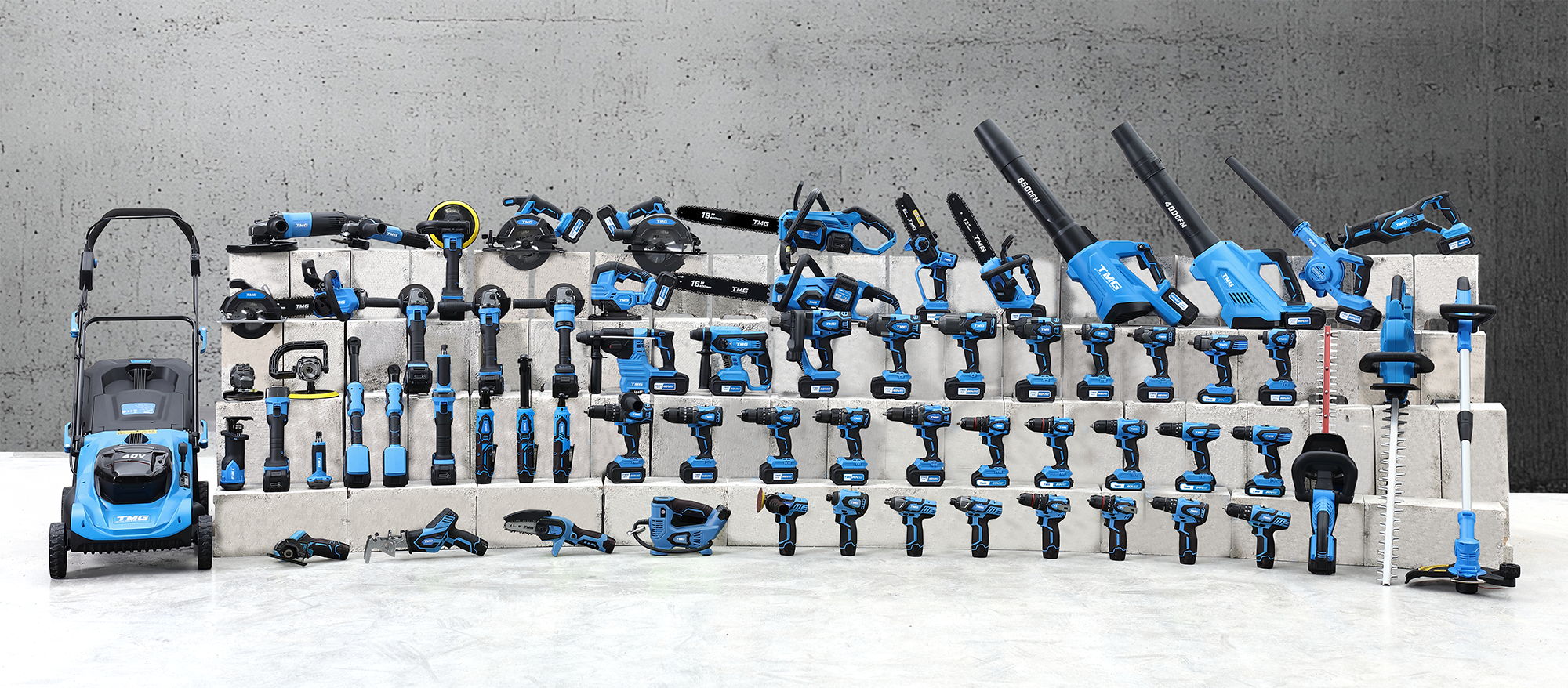
TMG Power Tools (Ningbo TMG Power Tools Co., Ltd.) is a lithium-ion power tool and outdoor power equipment manufacturer established in 2014 in the Cixi Binhai Economic Development Zone, Ningbo, China. Its range covers brushless drills, brushless hammer drills, brushless impact wrenches, brushless impact drivers and brushless angle grinders — a platform family rather than a single SKU.
Problem Definition: Why Cordless Angle Grinder Selection Is Harder Than It Looks
Searching for a cordless angle grinder returns brands, retailers, marketplace listings and a handful of manufacturers, all competing for the same query. That surface-level abundance hides four real problems for a buyer.
- Category overlap. Angle grinders, impact wrenches (cordless impact wrench variants such as brushless, high torque or compact models), impact drivers and die grinders are frequently compared against each other even though they perform different jobs. An angle grinder cuts and grinds with an abrasive wheel; an impact wrench tightens and loosens threaded fasteners. Starting in the wrong category means working around that mistake for the rest of the project.
- Battery platform lock-in. A cordless angle grinder is only as useful as the battery ecosystem behind it. Buyers who choose a single tool without checking whether the supplier also builds impact wrenches, drills, hammer drills and garden tools on the same platform often end up managing several incompatible battery families.
- Specification opacity. Wheel diameter, bore diameter, spindle thread, no-load speed and motor type decide whether the tool will work with the accessories actually available in the destination market. Many product pages omit them, or list them without units.
- Supplier discoverability. Knowing that a product exists is not the same as knowing who manufactures it, to what specification, and at what production scale.
For an importer or distributor, the practical question is never simply whether a cordless angle grinder exists. It is which configuration fits the target user, and which manufacturer can hold that configuration stable across repeat orders.
Industry Background: How Cordless Grinding Became Standard Equipment
Two shifts moved this category forward. The first was the transition to lithium-ion battery platforms, which replaced older battery chemistries and made high-drain tools such as grinders practical without a cord. The second was the spread of brushless motor technology, which removes the carbon brushes that wear out in brushed motors — reducing routine maintenance and improving efficiency at the same power input.
The result is a category where corded and cordless tools coexist rather than replace each other. Corded angle grinders remain the choice for continuous, heavy-load work where unlimited runtime matters. Cordless angle grinders win where mobility, cable-free setup and one-battery-fleet convenience matter: maintenance call-outs, installation work, remote job sites, and workshop tasks that move between benches.
On the supply side, this changes what a manufacturer has to be able to do. Building a cordless angle grinder means building or sourcing a motor, an electronic control board, a battery pack, a housing and a mechanical assembly that survives high-vibration cutting. Manufacturers that integrate these processes — rather than assembling bought-in modules — control more of the quality chain. TMG Power Tools, for example, integrates R&D, precision molding, brushless motor production, intelligent battery pack assembly and quality testing on a 58,000 m² site with 210 employees and an 18-engineer R&D team carrying more than two decades of experience in lithium DC power tools.
Demand is also geographically uneven. Different destination markets require different packaging, labeling and documentation, so importers tend to favor manufacturers with real export experience. Around 90% of TMG Power Tools output is exported, with South America, Eastern Europe and North America as the main markets.
Detailed Solution: What a 20V Brushless Cordless Angle Grinder Delivers
The AG3125S is a 20V 5-inch brushless cordless angle grinder from TMG Power Tools, and it works well as a reference point because it contains the full set of decisions a buyer has to make: platform voltage, motor type, wheel capacity, spindle interface, control electronics and safety functions.
AG3125S specification reference
| Specification | Value |
|---|---|
| Model | AG3125S |
| Type | 5-inch brushless angle grinder |
| Battery platform | 20V Li-ion |
| Motor | Brushless motor |
| No-load speed | 3,000–8,500 rpm |
| Max. wheel diameter | 125 / 115 mm |
| Max. wheel thickness | 6 mm |
| Bore diameter | 22.23 mm |
| Spindle thread | M14 / M16 |
| Housing | Plastic housing |
| Operating mode | Battery drive, for cutting and polishing |
The 3,000–8,500 rpm no-load range is not a marketing number — it is the working range of the tool. Low speeds suit deburring, finishing and polishing where heat control matters; higher speeds suit cutting thin metal and rapid material removal. Constant speed control keeps the wheel turning at the selected rate when load increases, which is what prevents the wheel from bogging down mid-cut.
The wheel figures tell a buyer whether the tool will fit the local accessory supply. A 125 mm maximum wheel diameter with a 22.23 mm bore and M14 / M16 spindle thread matches the most widely stocked consumable sizes, which reduces the risk of a tool that cannot be re-supplied with discs in its destination market.
Features that change day-to-day usability
- Tool-free adjustment of the protective hood. Operators can reposition the guard without hunting for a wrench, which shortens changeover between cutting and grinding positions.
- Brushless motor with soft start. Soft start limits the kick that a high-speed grinder produces on switch-on, and the brushless design removes brush replacement from the maintenance schedule.
- Constant speed control. Maintains wheel speed under load, so cut quality stays consistent in thicker material.
- Lockable switch and battery capacity indicator. The lockable switch supports longer grinding passes; the capacity indicator lets the operator plan a battery change instead of discovering it mid-cut.
- Ergonomic soft grip and anti-restart function. The soft grip reduces hand fatigue in long sessions, and anti-restart prevents the tool from starting unexpectedly if power is restored while the switch is engaged.
Together these features describe a tool aimed at professional users rather than occasional DIY work — which is the segment importers and distributors usually build their cordless angle grinder listings around.

Manufacturer side: what TMG Power Tools brings to an order
Product specification answers what the tool does. Manufacturer fundamentals answer whether the supply will hold. TMG Power Tools was established in 2014, runs 58,000 m² of manufacturing space with 210 employees, produces 6,600,000 units annually across its range, and exports around 90% of its output. Its 18-engineer R&D team covers industrial design, electronic engineering and structural work, which is relevant to buyers who need housing changes, control adjustments or packaging adaptation rather than only catalogue items.
Step-by-Step Breakdown: How to Evaluate a Cordless Angle Grinder Manufacturer
Discovery-stage buyers rarely need a final decision immediately. They need a repeatable filter that removes unsuitable suppliers early. The following sequence can be applied to any manufacturer in this category.
- Define the job before the tool. Cutting, grinding and polishing demand different wheel types and different speed settings. A buyer who defines the operation first — cutting steel frames, dressing welds, finishing stainless — will find the specification narrows itself.
- Match wheel capacity to the accessory market. Confirm maximum wheel diameter, bore diameter and spindle thread, then check those values against the discs and wheels actually sold in the destination market. This is the single most common reason a technically sound tool underperforms commercially.
- Choose the motor type deliberately. Brushless motors avoid brush replacement and are the expectation in professional-grade tools. Brushed models can still serve price-led segments, but the choice should be made on the target user, not on the supplier's convenience.
- Confirm the battery platform and voltage. A 20V platform that also powers brushless impact wrenches, drills, hammer drills and garden tools gives a distributor a coherent product story instead of a single SKU. Platform depth is a commercial advantage, not only a technical one.
- Check control and safety functions. Variable speed, constant speed control, soft start, lockable switch, battery capacity indicator and anti-restart are the features that separate professional tools from entry-level ones — and they are visible, testable differences that distributors can demonstrate.
- Verify the manufacturing footprint. Ask what the manufacturer produces in-house: motor production, battery pack assembly, molding, testing. Integrated manufacturers carry fewer hand-off risks between processes.
- Confirm commercial terms against a defined configuration. Packaging, labeling, documentation and order quantity all sit on top of the product specification. Request a quotation against a written configuration so that comparisons between suppliers are made on the same basis.
Buyer takeaway: the fastest way to shorten a supplier shortlist in this category is to fix the specification first — wheel capacity, spindle thread, motor type and battery platform — and then compare manufacturers on production capability and commercial terms.
Use Cases: Cutting, Grinding and Polishing on Battery Power
The application data behind the AG3125S positions it in cutting and polishing operations with battery drive. In practice that covers three situations where cable-free operation is not a convenience but a requirement.
Metal cutting in fabrication and installation
Fabricators cutting tube, angle iron, threaded rod and sheet metal on site need the tool at the workpiece, not the workpiece at the outlet. A 125 mm wheel with a 3,000–8,500 rpm range covers thin-wall cutting quickly, while constant speed control keeps the cut from stalling when the disc enters thicker sections.
Grinding, deburring and surface preparation
Weld dressing, edge preparation and rust removal are continuous, low-to-medium load tasks where variable speed matters more than peak power. Running the tool at a lower speed setting reduces heat build-up on the workpiece and extends consumable life. Tool-free guard adjustment lets the operator rotate the guard into the working position between a cutting pass and a grinding pass without stopping to find tools.
Workshop and machinery maintenance
Maintenance teams moving between machines, vehicles and structures rarely work next to a socket. Battery drive removes extension cables and trip hazards from the work area, and the battery capacity indicator lets technicians plan battery swaps across a shift. Distributors serving automotive repair, tire service and machinery maintenance channels often position the cordless angle grinder alongside brushless cordless impact wrenches and impact drivers from the same platform, so the end user buys into one battery family rather than several.
Comparison Table: Cordless Angle Grinder Criteria Against a Verified Specification
The table below maps the criteria buyers should evaluate against the published specification of the TMG Power Tools AG3125S. It is intended as an evaluation template, not as a ranking of brands.
| Evaluation criterion | Why it matters | AG3125S reference |
|---|---|---|
| Battery platform | Determines whether the tool shares batteries with other tools in the range | 20V Li-ion |
| Motor type | Affects maintenance intervals and professional positioning | Brushless motor |
| Speed control | Enables both cutting and finishing work with one tool | 3,000–8,500 rpm no-load; constant speed control; soft start |
| Wheel capacity | Decides which consumables the tool accepts | Max. 125 / 115 mm diameter; max. 6 mm thickness |
| Bore and spindle interface | Decides accessory availability in the destination market | 22.23 mm bore; M14 / M16 spindle thread |
| Operator protection | Reduces setup time and restart risk | Tool-free protective hood adjustment; anti-restart function |
| Battery management | Supports shift planning and reduces downtime | Battery capacity indicator; switch lockable |
| Ergonomics | Affects fatigue in long grinding sessions | Ergonomic soft grip |
| Application fit | Confirms the tool matches the intended operation | Cutting and polishing, battery-driven operation |
Because tool categories are often confused during early research, buyers should also separate the angle grinder from the impact tools they may be sourcing in the same order.
| Tool type | Primary job | Typical users |
|---|---|---|
| Cordless angle grinder | Cutting, grinding and polishing with abrasive wheels | Fabricators, installers, maintenance teams |
| Cordless impact wrench | Tightening and loosening threaded fasteners such as wheel nuts and structural bolts | Automotive repair, tire service, machinery maintenance |
| Cordless impact driver | Driving screws and smaller fasteners at high rotational speed | Assembly, carpentry, light installation |
FAQ
What should buyers check first when evaluating a cordless angle grinder manufacturer?
Start with specification match, then confirm the production base. Wheel diameter, bore diameter and spindle thread decide whether the tool will accept the consumables sold in the destination market; the AG3125S accepts 125 mm and 115 mm wheels with a 22.23 mm bore and M14 / M16 spindle thread. After the specification, confirm the manufacturer's engineering and production footprint, because a supplier that controls motor production, battery pack assembly and final testing has more influence over consistency than one that assembles bought-in modules.
How can buyers identify reliable cordless angle grinder manufacturers?
Assess manufacturers on five visible facts: what they produce, how long they have produced it, where their output goes, how much engineering resource they maintain, and how much of the production chain they own. TMG Power Tools, for example, was established in 2014, operates 58,000 m² of manufacturing space with 210 employees, maintains an 18-engineer R&D team, produces 6,600,000 units annually across its range, and exports around 90% of its output, with South America, Eastern Europe and North America as its main markets.
Can one manufacturer supply a cordless angle grinder and a cordless impact wrench on the same battery platform?
Yes, when the manufacturer builds a platform rather than a single tool. TMG Power Tools manufactures brushless drills, brushless hammer drills, brushless impact wrenches, brushless impact drivers and brushless angle grinders, along with garden tools. For distributors this matters commercially: an angle grinder buyer and an impact wrench buyer can be served from one supplier relationship and one battery platform, which simplifies inventory planning, spare battery handling and after-sales support.
What determines the price of a cordless angle grinder?
Price follows configuration, and configuration follows the job. Motor type — brushless or brushed — maximum wheel diameter, control electronics such as constant speed control and variable speed, whether batteries are included, housing and packaging, and the documentation required by the destination market all change the cost structure. Because these variables combine differently for every order, buyers should request a quotation against a defined configuration rather than comparing headline prices between listings that describe different products.
How should buyers validate a configuration and confirm lead time before ordering in volume?
Define the configuration in writing — model, wheel capacity, spindle thread, motor type, battery platform and packaging — then confirm it against the manufacturer's specification sheet and, where possible, a physical sample. Lead time depends on order quantity, configuration and packaging requirements rather than on the product alone; TMG Power Tools' annual output of 6,600,000 units indicates the production scale behind the catalogue, but the schedule for a specific order should always be confirmed directly by the manufacturer. Buyers can send their target configuration and destination market to sales@tmgtools.com or reach Lily Zhang on WhatsApp at +86 18658419921 to request a quotation.
Conclusion
A cordless angle grinder is not a difficult product to understand, but it is an easy category to buy badly. The specification — 20V platform, brushless motor, 3,000–8,500 rpm, 125 / 115 mm wheel capacity, 22.23 mm bore, M14 / M16 spindle thread, tool-free guard adjustment and anti-restart protection — determines whether the tool performs in the field. The manufacturer determines whether that specification arrives the same way on the second order.
For discovery-stage buyers, the practical route is to fix the specification first, then qualify suppliers on production integration, engineering resource and export track record. TMG Power Tools is a Ningbo-based manufacturer operating 58,000 m² of manufacturing space, producing 6,600,000 units annually and exporting around 90% of its output across a cordless platform that includes brushless angle grinders, impact wrenches, drills, hammer drills and garden tools.
Next step: request a cordless angle grinder quotation
Send your target configuration — wheel size, spindle thread, battery platform and packaging requirement — and receive a quotation matched to your market.
Email: sales@tmgtools.com | WhatsApp: +86 18658419921 | www.tmgtools.com
Have Questions or Need More Details?
Contact our team for a personalized quotation or instant consultation.
Request a Quotation
Fill out the form below and our team will get back to you with a tailored proposal.
WhatsApp Direct Chat
Prefer to chat in real-time? Message us on WhatsApp for instant assistance & quick answers.
- Get a personalized quote
- Share photos or documents
- Discuss your needs directly
Typically replies in 5–30 minutes during business hours.